





Dimensions required for staircase planning
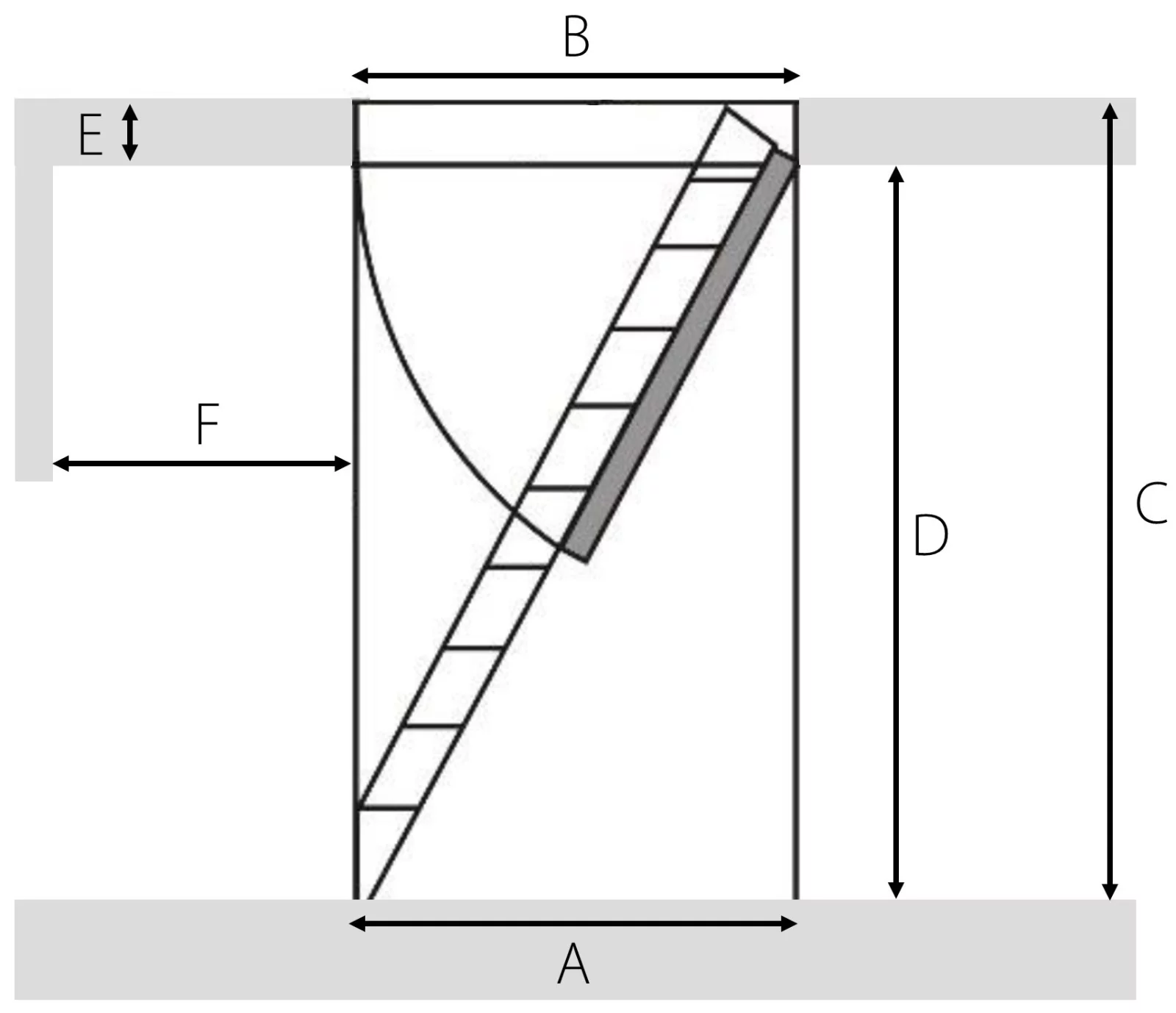
What dimensions do I need when planning my stairs?
- Basic dimensions (A): The space available for your staircase is decisive for which models are suitable in the first place. The best way to do this is to measure the length and width of the space available for the stairs at the bottom of the room. Here it can help to take a floor plan of the room from a bird’s eye view.
- Dimensions of the ceiling opening (B): The diameter of spiral staircases, the width of space-saving stairs and the dimensions of the hatch box for loft stairs must be chosen to match the ceiling opening. Therefore, be sure to measure the length and width of your ceiling opening before buying your staircase. In the case of system stairs, it should be noted that the ceiling opening must be 10 cm larger than the dimensions of the stairs. For example, a spiral staircase with a diameter of 140 cm requires a ceiling opening with a length and width of 150 cm.
- Room height: The room height is also an important key figure for the planning of a staircase. A distinction must be made between two dimensions:
- Floor height (C): The floor height is measured from the top of the floor to the top of the ceiling or gallery. It is crucial for the choice of system stairs.
- Clear room height (D): In the case of loft stairs, on the other hand, the clear room height is considered an essential indicator. This is measured from the top edge of the floor to the bottom edge of the ceiling.
- Ceiling thickness (E): The ceiling thickness is also particularly relevant for the installation of attic stairs. To find out, all you have to do is measure from the bottom edge of the ceiling to the top edge of the ceiling.
- Fold-out space (F): In the case of attic stairs, it should be noted that they usually require a certain amount of space to fold out. This area, which goes beyond the basic dimensions, is called a fold-out space.
You can also find a detailed guide to planning your staircase in our blog: 5 steps to your dream staircase